If your metal building, pole barn, or shop has ever “sweated” and left drip lines on the purlins, you already know how frustrating condensation can be. It can make floors slick, create musty odors, rust tools and equipment, and even damage stored materials.
This post breaks down the most common
metal building insulation options and explains which ones work best for
condensation control—especially in Southeast Nebraska where temperature swings are common.
First: Why metal buildings sweat
Condensation isn’t always a roof leak. Most of the time it’s simply physics:
- Warm air holds moisture.
- Metal surfaces cool quickly—especially overnight.
- When warm, moist indoor air hits a cold metal panel below the dew point,
water forms on the surface and drips.
To reduce condensation, you need to do at least one of these:
- Reduce humidity inside,
- Warm the interior surface, or
- Stop moist air from reaching cold surfaces (air sealing / vapor control).
Most successful solutions do a mix of all three.
The most common insulation options (and how they compare)
1) Fiberglass batts
Fiberglass is popular because it’s affordable and easy to find. But in metal buildings, fiberglass can struggle if it’s not paired with strong air sealing and vapor control.
Pros
- Lower upfront cost
- Widely available
- Works in simple wall cavities when installed well
Cons
- Doesn’t stop air movement (drafts still happen)
- Can trap dust, and dust + moisture can lead to mold concerns
- Can sag or lose performance over time if exposed to moisture
- Often doesn’t solve “sweating metal” by itself
Best for: finished interiors with a solid vapor plan and good air sealing already in place.
2) Loose-fill (blown-in) insulation
Blown-in insulation can improve R-value in certain applications, but it still depends heavily on air sealing and proper containment. In many metal buildings, gaps and air movement reduce its real-world performance.
Pros
- Can cover wide areas quickly
- Good for some attic or flat ceiling applications
- Helps with R-value if the cavity is properly sealed
Cons
- Air movement reduces effectiveness
- Doesn’t seal penetrations
- Moisture issues can reduce performance
Best for: attic/ceiling cavities that are already well sealed and contained.
3) Rigid foam board (panels)
Rigid foam board can be effective when installed continuously and sealed at seams. The challenge is that in real buildings, seams and penetrations are everywhere—so detail work matters.
Pros
- Good thermal value per inch
- Can create a thermal break if installed continuously
- Works well in certain retrofit setups
Cons
- Seam sealing is critical (and time-consuming)
- Hard to seal around complex framing, fasteners, and penetrations
- Gaps can become condensation points
Best for: straightforward surfaces where seams can be sealed properly.
4) Insulation blankets (commonly used in metal buildings)
Metal building blankets (often fiberglass with facing) are common in new construction. They can help with basic insulation goals, but they don’t always eliminate condensation—especially when there are air leaks, gaps, or high humidity inside.
Pros
- Common and familiar in metal building construction
- Can provide decent baseline insulation
Cons
- Gaps and compression reduce performance
- Doesn’t fully solve condensation when moist air reaches cold metal
- Seams and transitions often leak air
Best for: basic insulation needs where condensation is mild and the building isn’t heavily used or heated.
5) Closed-cell spray foam (SPF)
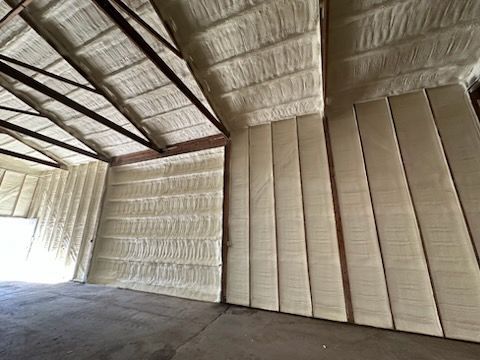
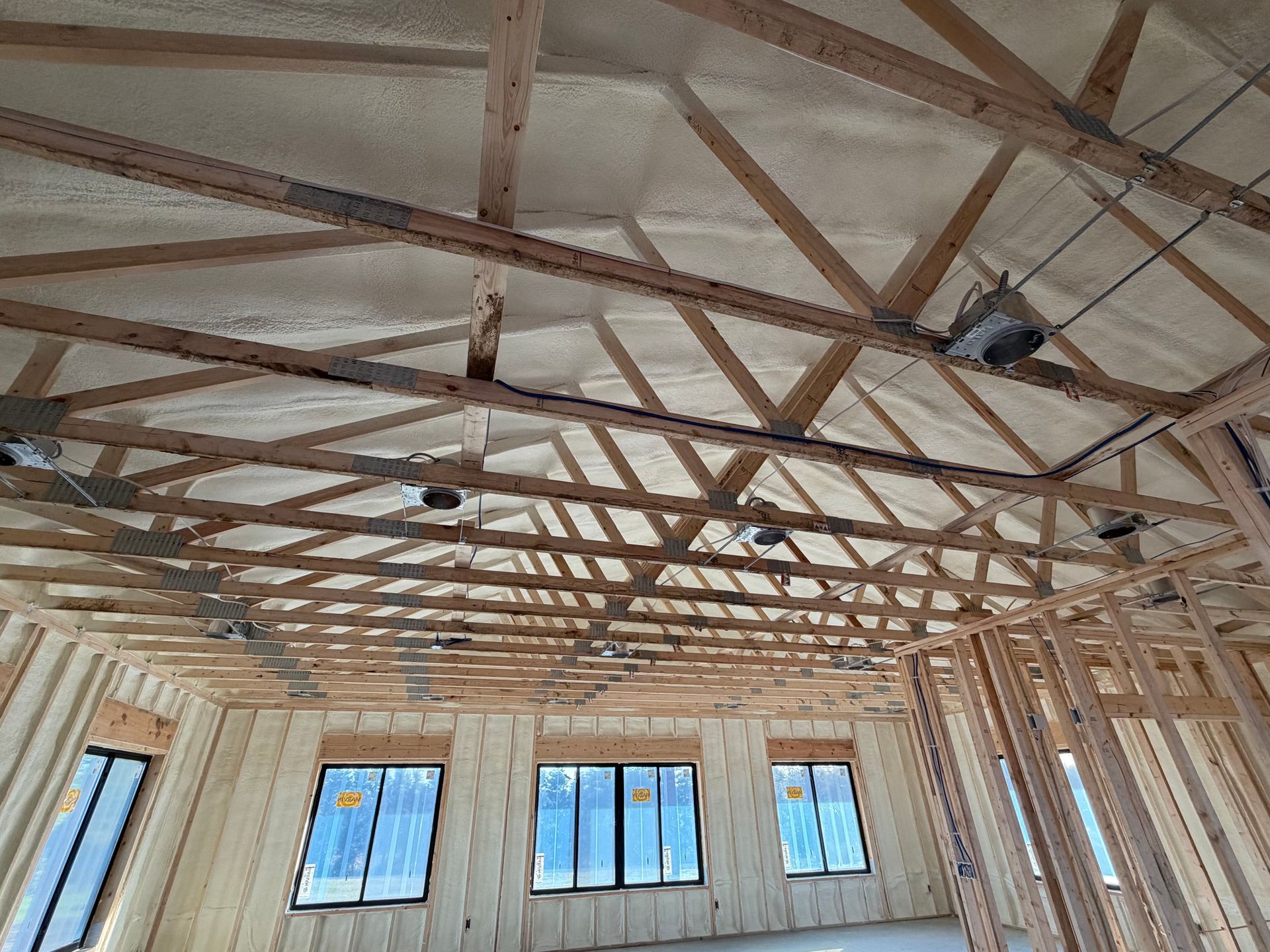
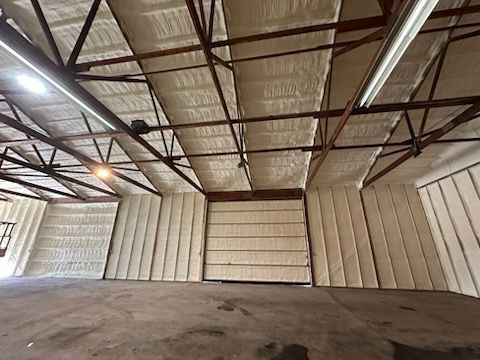
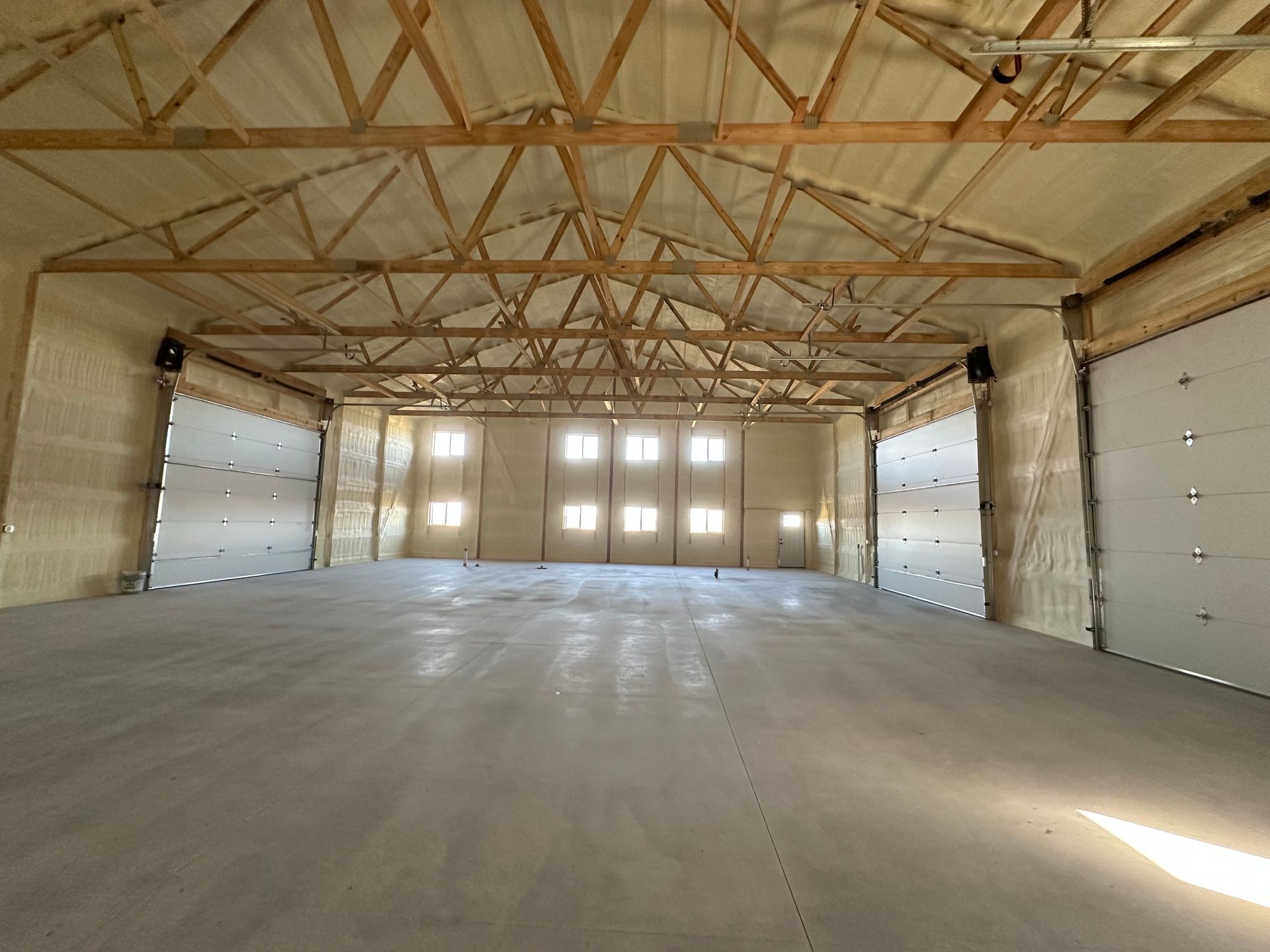
Closed-cell spray foam is one of the strongest solutions for metal buildings because it changes the surface conditions that create condensation.
Closed-cell foam bonds directly to metal and creates:
- A
thermal break (warmer interior surface)
- An
air seal (stops moist air from reaching cold metal)
- A
moisture-resistant layer built for tough environments
Pros
- Excellent condensation control (prevents “sweating” at the source)
- Seals gaps and penetrations automatically
- High R-value per inch
- Durable and low maintenance
- Works well on roofs, walls, transitions, and fastener areas
Cons
- Higher upfront cost than basic fiberglass
- Best results require clean, dry surfaces and proper application
Best for: pole barns, shops, warehouses, and metal buildings where condensation and comfort are priorities.
Roof-first vs full building: the practical approach
If budget matters, many owners get the best return by starting with the roof underside first. The roof is where:
- condensation often forms first
- the biggest heat loss occurs
- surface temperature swings are most extreme
Roof-first is often enough to eliminate drip lines and make the building feel steadier. Walls can be added later if the space will be heated daily or finished out.
Don’t forget the “cheap fixes” that make a big difference
Even the best insulation can’t overcome major air leaks. Before (or alongside) insulation, make sure you address:
- overhead door seals and bottom sweeps
- man door weather stripping
- gaps around conduit and penetrations
- obvious moisture sources (wet equipment, standing water)
These small fixes improve performance no matter which insulation type you choose.
What’s the best insulation option for your metal building?
Here’s a simple way to decide:
- If your main issue is condensation: closed-cell spray foam is often the most reliable fix.
- If your main goal is basic R-value in a finished space: fiberglass or rigid foam can work with solid air sealing and vapor control.
- If you want comfort + durability + fewer future headaches: roof-first closed-cell foam is commonly the best long-term value.