Spray Foam for Pole Barns: Roof First or Walls Too?
If you own (or are building) a pole barn, one of the most common insulation questions is simple:
Should I spray foam just the roof, or do the walls too? The good news is you don’t always need to do everything at once to get real results.
In Southeast Nebraska, most pole barn problems come down to two things:
- Condensation (sweating metal, drip lines, musty smell)
- Comfort (hard-to-heat space, big temperature swings)
This guide will help you choose a spray foam plan that fits your budget and how you actually use the building.
Step 1: Decide the goal—condensation control or year-round comfort
Before you pick “roof only” or “full building,” answer this question:
Are you mainly trying to stop condensation?
If your barn is sweating, dripping, or rusting tools, the issue is usually dew point—warm, moist air hitting a cold metal surface. In that case,
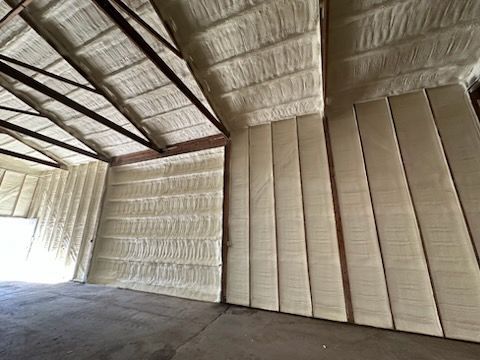
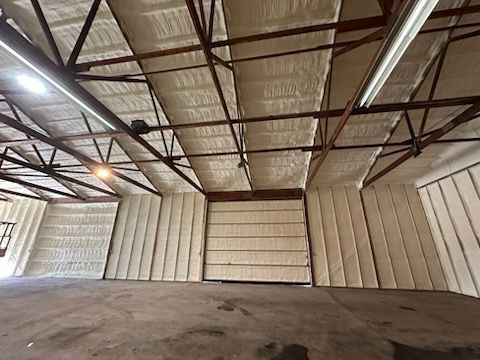
roof-first spray foam is often the highest-impact solution because the roof is where metal cools fastest and where condensation shows up first.
Or are you trying to create a comfortable heated workspace?
If you’re heating the barn regularly (daily work, hobby shop, office, man cave), you’ll often want more than just the roof—because the walls become the next biggest heat-loss path once the ceiling is tightened up.
Why roof-first is usually the best starting point
If budget matters, roof-first closed-cell spray foam is popular because it:
- reduces or eliminates drip lines
- keeps the interior roof surface warmer (above dew point)
- improves comfort immediately because heat rises
- often gives the biggest return per dollar
Many pole barn owners start roof-first and then decide later if walls are needed.
When roof-only is enough
Roof-only is often a great fit when:
- the building is mainly for storage
- you don’t plan to heat it regularly
- your biggest problem is condensation on the roof
- you want a major improvement without fully finishing the space
If your main issue is sweating metal and musty smell, roof-first can be the “sweet spot.”
When walls are worth adding
Walls start to matter more when:
- the barn will be heated frequently or finished out
- you want steadier temps and less heat loss in winter
- you want the building to feel more like conditioned space
- you want better noise reduction (especially near roads or equipment)
If you’re going to heat the space daily,
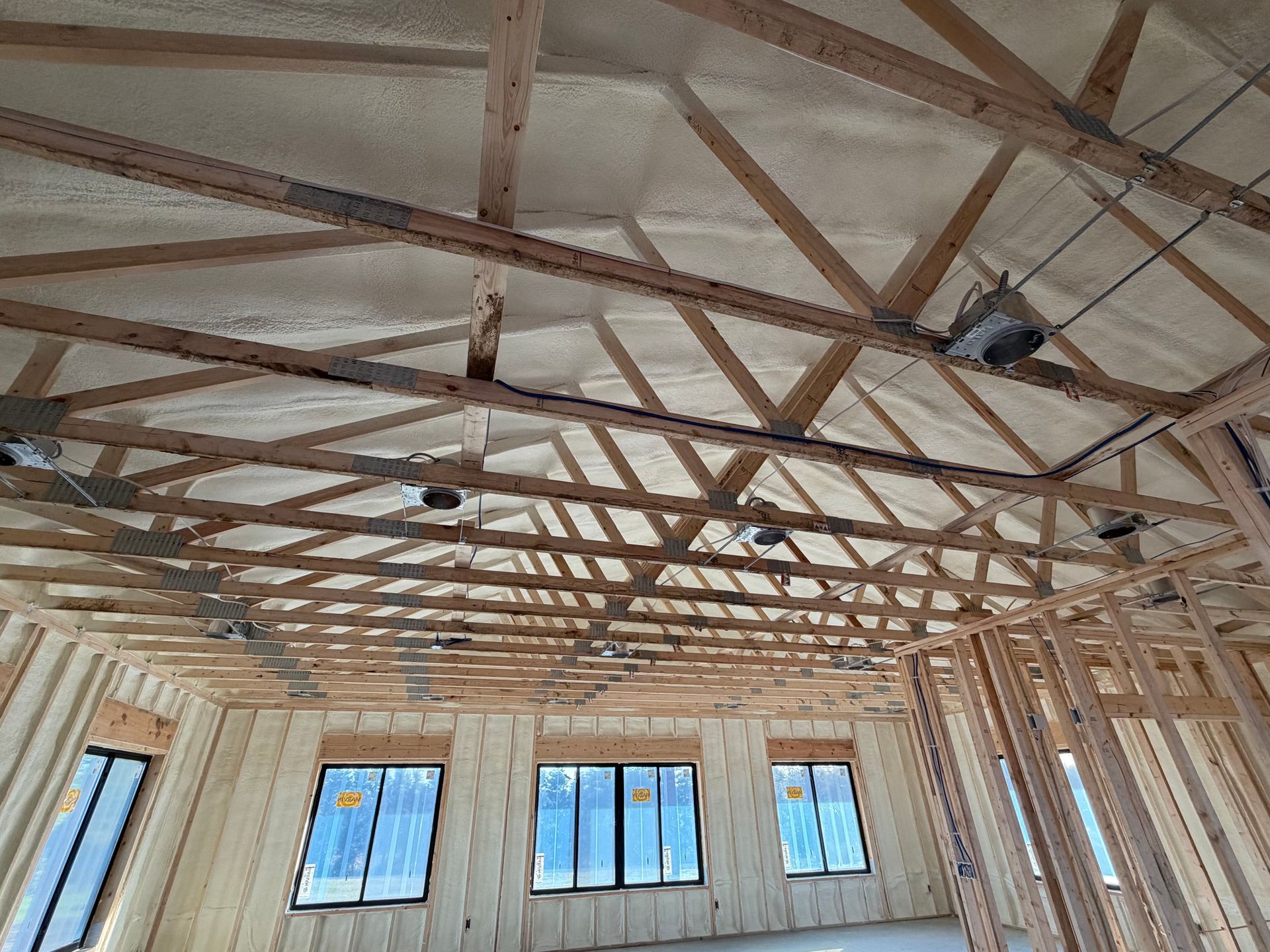
roof + walls usually provides the comfort people are aiming for.
Don’t overlook transitions and “problem zones”
Whether you foam roof-only or roof + walls, the details are what make it work:
Key areas that often drive condensation and drafts
- wall-to-roof transitions (eaves)
- corners and framing joints
- penetrations (electrical, plumbing, vents)
- around overhead door framing
- man doors and thresholds
Even the best insulation plan can underperform if these areas are ignored.
A simple decision guide
Here’s a quick way to choose:
Choose roof-first if:
- you want to stop drip lines
- you want a noticeable improvement fast
- the building is storage or occasional use
- you may add walls later
Choose roof + walls if:
- you plan to heat it regularly
- you want it comfortable for long work sessions
- you want steady temps and fewer drafts
- you’re finishing the interior
What about doors?
Overhead doors are often the biggest leak point in a pole barn. Even with spray foam, a leaky door can make the building feel drafty and hard to heat.
Make sure you have:
- bottom seals that match your concrete floor
- side/top weather stripping
- proper alignment and latching
- sealed framing around the door opening
Door sealing is one of the cheapest comfort upgrades you can make.
FAQs
Do I have to foam the entire building at once?
No. Many owners start with roof-only, then add walls later if they decide to heat the barn more often.
Will roof foam stop condensation on the walls too?
It can help, but wall condensation may still happen depending on humidity sources and airflow. Roof-first is a strong start, then adjust based on results.
Is closed-cell foam the best choice for pole barns?
Closed-cell is commonly chosen because it creates an air seal, resists moisture, and helps prevent condensation by keeping interior surfaces warmer.
If you tell us how you use your pole barn (storage, heated shop, livestock, equipment) and your town, we’ll recommend whether roof-only makes sense or if roof + walls will be a better fit—and we’ll provide a friendly estimate and timeline.