


Can You Add Spray Foam to an Existing Home? (Yes — Here's How)

Karen Danner • October 1, 2026

Share this article

The short answer: Yes — spray foam absolutely works on existing homes, and older houses usually benefit the most. The best retrofit targets are the places we can reach without opening a single finished wall: rim joists, attics, kneewalls, crawl spaces, and garages. Most jobs are done in a day.

One of the most common things we hear in Southeast Nebraska goes something like this: "I'd love spray foam, but my house was built in 1965 — isn't it too late for that?" It's an honest question, and the answer surprises people: not only is it not too late, but older homes are exactly where foam makes the most dramatic difference. Here's how a retrofit really works.

The myth that keeps older homes cold

Because spray foam is often photographed in new construction — open studs, fresh framing — a lot of folks assume that's the only time it can go in. The truth is that a large share of our work is on existing homes: farmhouses, ranch homes from the '60s and '70s, and everything in between. These houses were built when energy was cheap and insulation standards were thin, which means they have the most to gain.

Where can foam go without opening up my walls?

The highest-payoff areas in almost any existing home are completely accessible:

Rim joists. Reached right from the basement or crawl space — no demolition, and often the single biggest comfort improvement per dollar in the house.

The attic. Slopes, kneewalls, hatches, and chases are all open from above. Sealing them stops the warm-air escape that drives your heating bill.

Crawl spaces. Foam transforms damp, cold crawl spaces — and the cold floors above them.

Garages and bonus rooms. That freezing room over the garage? The garage ceiling below it is usually accessible and fixable.

What about my finished walls?

Straight talk: enclosed wall cavities are a bigger conversation, and honestly, they're usually not where we'd have you start. In most existing homes, the accessible areas above deliver the majority of the comfort and savings for a fraction of the cost and disruption. We'll tell you plainly if wall work is worth it for your house — and if it isn't, we'll tell you that too. It's the same approach we bring to pricing every job: smallest fix, biggest payoff.

What does a retrofit actually look like?

Step 1: Call or text us a few photos of your trouble spots — cold rooms, the basement, the attic access.

Step 2: We come take a look, measure, and give you a clear free estimate with options.

Step 3: Install day. Our crew protects your home, sprays to spec, trims clean, and leaves the place tidy. Most residential retrofits are finished in a single day — you don't need to move out, and you'll feel the difference that same night.

Why do this in October?

Because you're about to pay for every leak in your house, every day, all winter. Work done now pays you back through the entire heating season — and our fall calendar fills quickly as the first cold snaps hit. Getting on the schedule in early October means you're sealed up before the hard cold, not after it.

Frequently asked questions

Is my house too old for spray foam?

No — we work on homes of every age, including century-old farmhouses. Older homes typically see the biggest improvement because they started with the least insulation.

Do I have to leave my home during the work?

For most targeted retrofits, no — we'll walk you through any temporary ventilation needs for your specific job when we give you the estimate.

How messy is it?

Our crew masks and protects everything near the work area and cleans up completely — "you wouldn't have even known they were there" shows up in our reviews for a reason.

What does a retrofit cost?

It depends on which areas we're sealing and how much foam they need — every job is quoted individually and estimates are always free. We wrote up exactly what drives spray foam cost if you want the full picture.

Your house doesn't have to be cold this winter just because it's not new. Call or text Danner Spray Foam at 402-269-7058 or request your free estimate — and let's get your home sealed up before the snow flies.

Recent Posts

Woman wrapped in a blanket holding a warm mug inside a chilly, drafty home
By Karen Danner • September 15, 2026
Cold rooms and drafts showing up with fall? Most drafts aren't your windows. See where the leaks really are, what fixes them & how to stop high heating bills.

Combine harvester picking corn in a Nebraska field under a clear blue sky
By Karen Danner • September 1, 2026
Harvest is coming fast. See why early fall is the moment to fix condensation in grain storage, equipment sheds & livestock barns—before the season buries you.
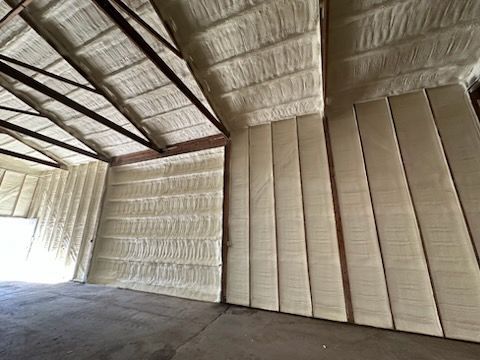
Building interior insulated with closed-cell spray foam by Danner Spray Foam
By Karen Danner • August 15, 2026
What drives the price of spray foam insulation in Nebraska? See the factors that shape your quote, why closed-cell is worth it, and how to get a free estimate.
A white two-story home framed by trees with colorful fall foliage in autumn
By Karen Danner • August 1, 2026
Building a shop, barn, or addition this fall? Here's why lining up spray foam in late summer means a warmer, drier space before Nebraska winter—and no scramble.

Blazing summer sun bursting through a bright blue sky on a hot day
By Karen Danner • July 15, 2026
Closed-cell spray foam isn't just for winter. See how it blocks summer heat, eases your AC, and keeps Nebraska homes, shops & garages cooler and cheaper to run.

June 30, 2026
Nebraska weather can change in a hurry.
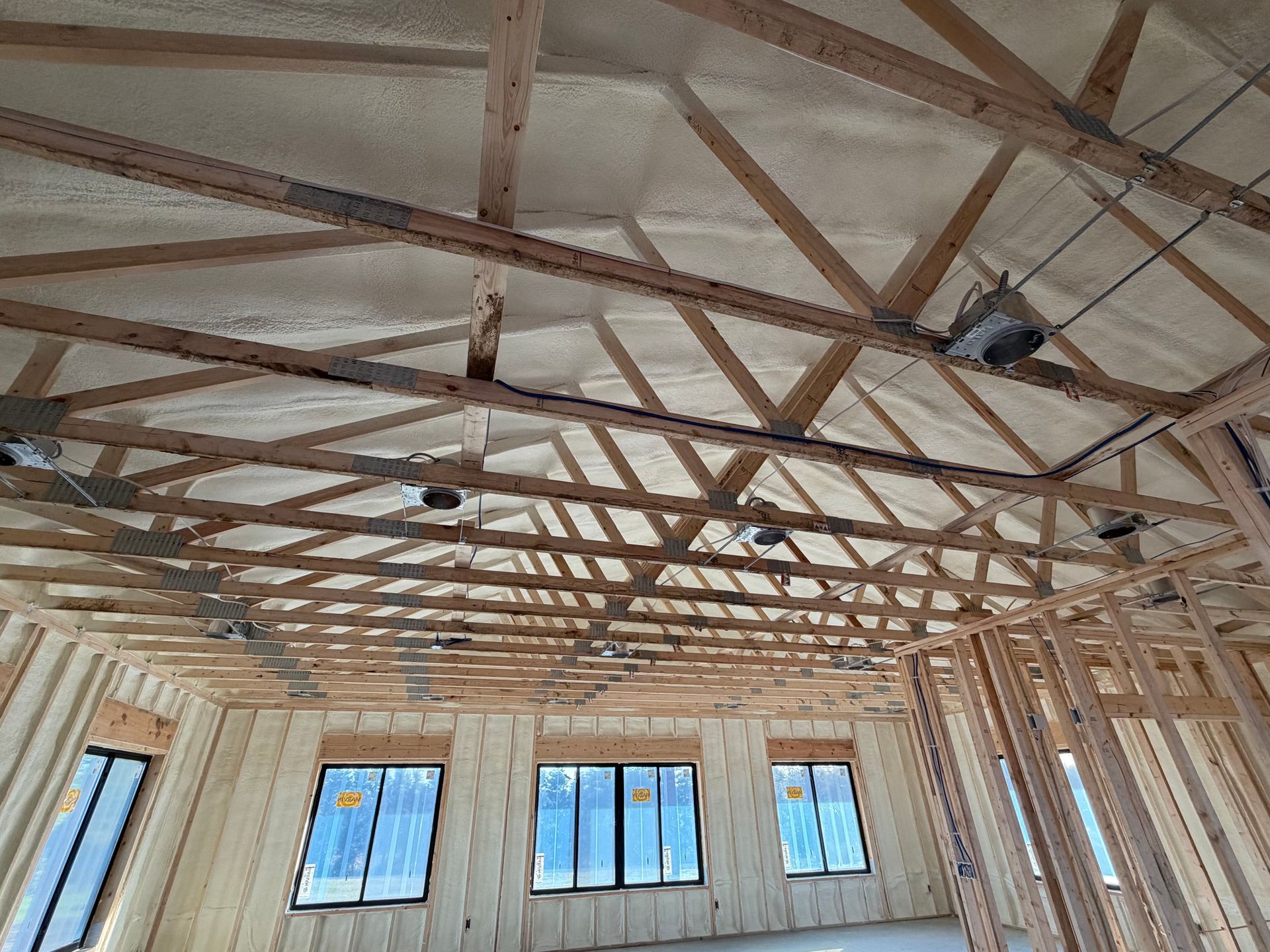
Interior of a wooden-framed building under construction with exposed roof trusses and several windows along the wall
June 15, 2026
Learn how spray foam roof insulation works on flat and low-slope roofs, when it’s a good fit, and what building owners should know before choosing SPF.
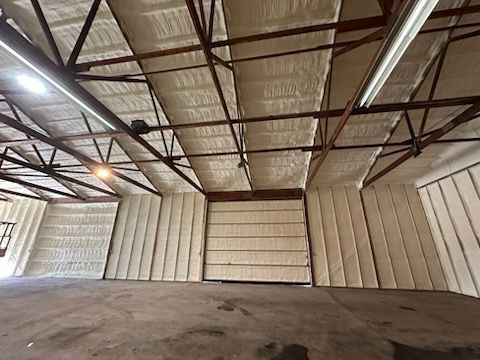
Empty warehouse interior with metal roof trusses and corrugated walls.
June 1, 2026
See where commercial closed-cell spray foam is used—metal buildings, warehouses, cold storage, and offices—and why it helps with condensation and costs.
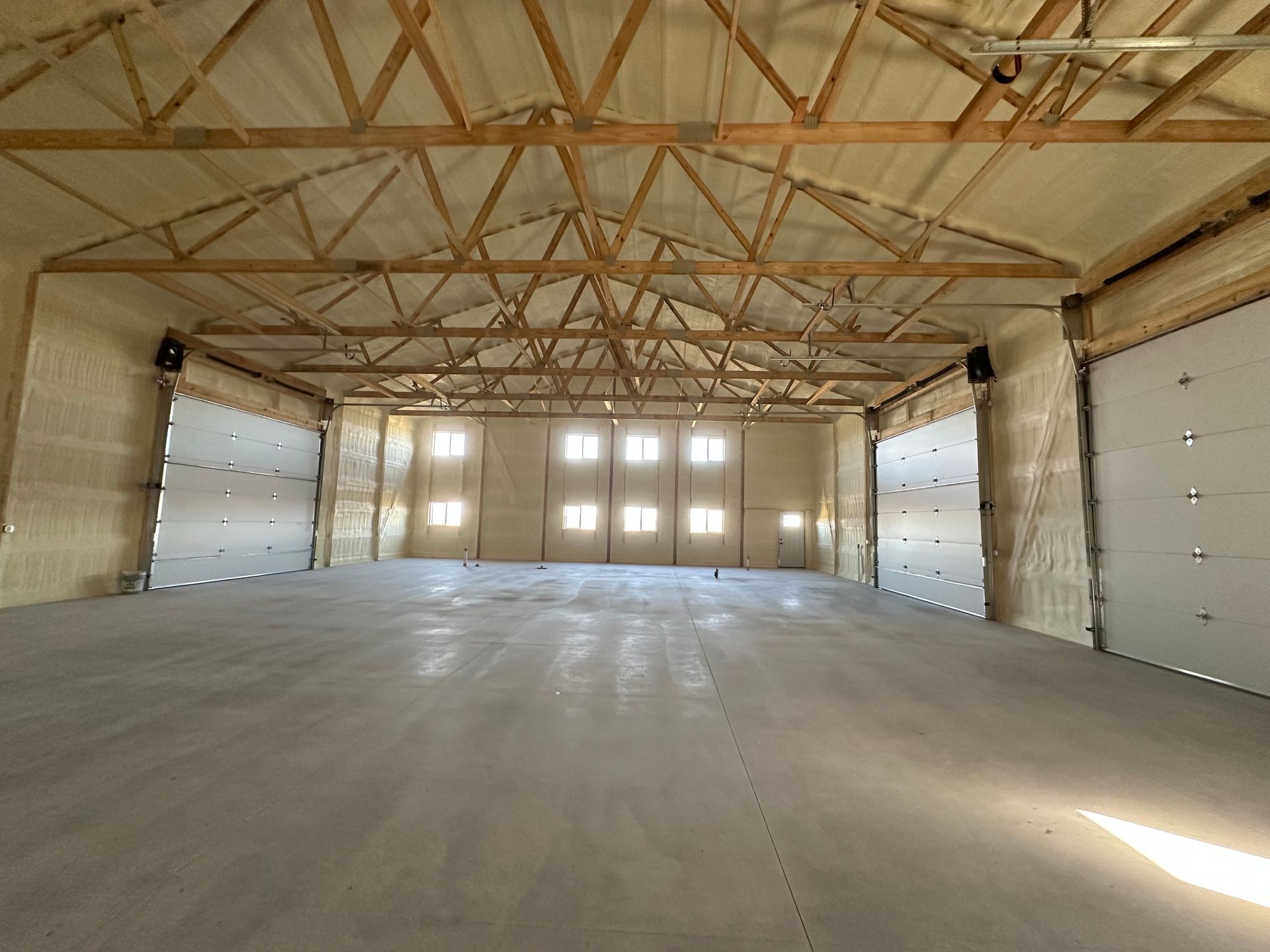
Empty industrial warehouse interior with concrete floor, exposed wooden trusses, and large garage doors
May 15, 2026
Planning spray foam for a pole barn? Learn when roof-only is enough, when walls matter, and how to choose based on heat, use, and condensation.
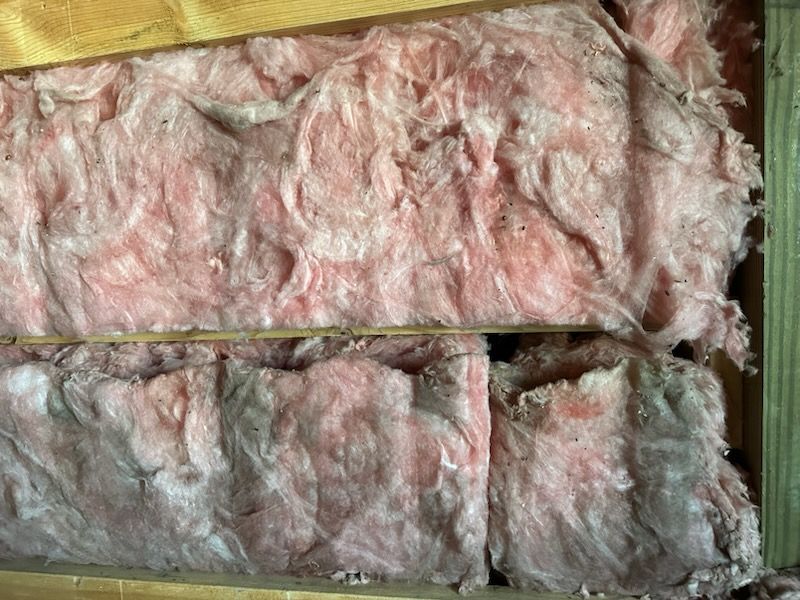
Pink fiberglass insulation batts stacked in a wooden frame, with foil or plastic backing visible.
May 1, 2026
Crawl spaces can cause cold floors, drafts, and musty odors. Learn insulation options, moisture basics, and why closed-cell spray foam is often a strong fit.
Show More