


How to Keep Your Pipes From Freezing This Winter in Nebraska

Karen Danner • October 15, 2026

Share this article

Short answer: pipes freeze because cold outside air reaches them, not because your furnace isn't working hard enough. The pipes that burst in Nebraska are almost always in a crawl space, an unheated basement wall, a rim joist cavity, or an exterior wall where outdoor air leaks in and sits against the plumbing. Sealing those spaces with closed-cell spray foam keeps the air around your pipes above freezing, which is the only thing that actually stops a freeze.

The first hard freeze always seems to arrive before anyone is ready for it. One night in the teens, and suddenly a faucet won't run, or worse, a line splits and nobody notices until the thaw.

Here is what we see in homes around Syracuse, Nebraska City, Palmyra and Lincoln, and what actually prevents it.

Why do pipes freeze in a house that is being heated?

Your furnace heats the living space. It does not heat the places your plumbing actually runs through.

A water line in a crawl space, along a foundation wall, or inside an exterior wall cavity is sitting in a pocket of air that the furnace never reaches. If that pocket is connected to the outdoors by a gap, a vent, or an uninsulated rim joist, it will track the outside temperature. When it drops below freezing out there, it drops below freezing in there too.

That is why a pipe can freeze on a night when your thermostat never moved.

Where do pipes freeze most often in Nebraska homes?

  • Crawl spaces. Vented crawl spaces pull outside air in by design. In July that is fine. In January it is a freezer directly under your floor. Crawl space insulation is the single biggest fix for most older homes.
  • Rim joists. The band of framing where the floor meets the foundation is usually the leakiest spot in the whole house, and water lines often run right past it. We wrote more about rim joists and why they cause so many problems.
  • Exterior walls with plumbing in them. Kitchen sinks on an outside wall are the classic one.
  • Unheated garages and shops. Hose bibs, utility sinks, and any line running overhead.
  • Attic runs. Less common here, but when it happens it is expensive.

What should I do tonight if a hard freeze is coming?

These are the short-term moves. They buy you time, they do not fix the cause.

  • Open the cabinet doors under sinks on exterior walls so warm room air can reach the pipes.
  • Let a faucet run at a slow trickle on the coldest nights. Moving water is much harder to freeze.
  • Disconnect garden hoses and shut off the valve feeding outdoor spigots.
  • Keep the thermostat at one steady setting instead of dropping it overnight.
  • Close crawl space vents if yours have covers.

Every one of those is a workaround. You are spending money on water and heat to compensate for air leaks you could seal once.

How does spray foam stop pipes from freezing?

Closed-cell spray foam does two jobs at the same time, and it is the combination that matters.

It insulates, so heat stops escaping through the floor and foundation. And it seals, because it expands into every gap, crack and odd-shaped cavity and cures into a solid air barrier. Fiberglass batts stuffed around a rim joist look like insulation, but cold air moves straight through and around them.

When we foam a crawl space or a rim joist, the space stops tracking the outdoor temperature and starts tracking the house. Pipes in a sealed, insulated crawl space in Nebraska generally sit well above freezing all winter without any heat source at all.

Closed-cell foam also resists moisture, which matters in a crawl space where condensation and musty air are usually part of the same problem.

Is it worth doing compared to a burst pipe?

A single burst line in a finished basement can run into the thousands once you add drywall, flooring, and whatever was being stored down there. Insurance may cover some of it, and your premium may notice.

Sealing and insulating a crawl space or a rim joist band is a one-time job that also lowers your heating bill every month afterward and takes the chill out of your floors. The frozen pipe you did not get is the part you never see on the invoice.

If you want a sense of what a project like this runs, we laid out the real numbers in what spray foam insulation costs in Nebraska.

Frequently asked questions

At what temperature do pipes start to freeze?

Water freezes at 32°F, but pipes inside a structure usually need the surrounding air to sit around 20°F or below for several hours before there is real risk. Wind makes it happen faster, because wind drives cold air through gaps.

Can you insulate around pipes that are already installed?

Yes. Spray foam is applied as a liquid and expands, so it works around existing plumbing, wiring and ductwork without anyone tearing anything out. That is one of the main reasons it suits older homes. We covered this in more detail in adding spray foam to an existing home.

Is pipe wrap enough on its own?

Pipe wrap slows heat loss from the pipe. It does nothing about the cold air sitting around it. If the air in that crawl space is 15°F, wrap only delays the freeze. Sealing the space is what changes the outcome.

Can you still do this work in the winter?

Yes. We spray through the Nebraska winter. Crawl spaces, rim joists and basements are all interior work.

How long does a crawl space or rim joist job take?

Most are a single day. You can use the house normally the same evening.

Get ahead of the next cold snap

If you have had a pipe freeze before, it will happen again in the same spot, because the cause is still there. If you have not, the places listed above are where to look first.

We will come out, look at your crawl space, rim joists and foundation walls, and tell you plainly what is worth doing and what is not. There is no charge for the estimate.

Request a free estimate or call us at 402-269-7058. We serve Syracuse, Lincoln, Nebraska City, Palmyra, Unadilla, Avoca, Elmwood, Weeping Water, Eagle, Louisville and the surrounding area.

Recent Posts

Classic older white two-story home with wraparound porch in late autumn
By Karen Danner • October 1, 2026
Think spray foam is only for new builds? Older Nebraska homes benefit most. See where foam goes in without opening walls—and why fall is the time to do it.

Woman wrapped in a blanket holding a warm mug inside a chilly, drafty home
By Karen Danner • September 15, 2026
Cold rooms and drafts showing up with fall? Most drafts aren't your windows. See where the leaks really are, what fixes them & how to stop high heating bills.

Combine harvester picking corn in a Nebraska field under a clear blue sky
By Karen Danner • September 1, 2026
Harvest is coming fast. See why early fall is the moment to fix condensation in grain storage, equipment sheds & livestock barns—before the season buries you.
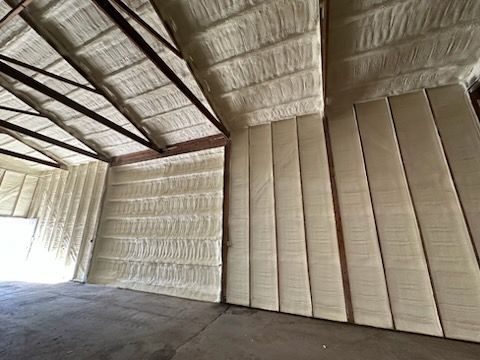
Building interior insulated with closed-cell spray foam by Danner Spray Foam
By Karen Danner • August 15, 2026
What drives the price of spray foam insulation in Nebraska? See the factors that shape your quote, why closed-cell is worth it, and how to get a free estimate.
A white two-story home framed by trees with colorful fall foliage in autumn
By Karen Danner • August 1, 2026
Building a shop, barn, or addition this fall? Here's why lining up spray foam in late summer means a warmer, drier space before Nebraska winter—and no scramble.

Blazing summer sun bursting through a bright blue sky on a hot day
By Karen Danner • July 15, 2026
Closed-cell spray foam isn't just for winter. See how it blocks summer heat, eases your AC, and keeps Nebraska homes, shops & garages cooler and cheaper to run.

June 30, 2026
Nebraska weather can change in a hurry.
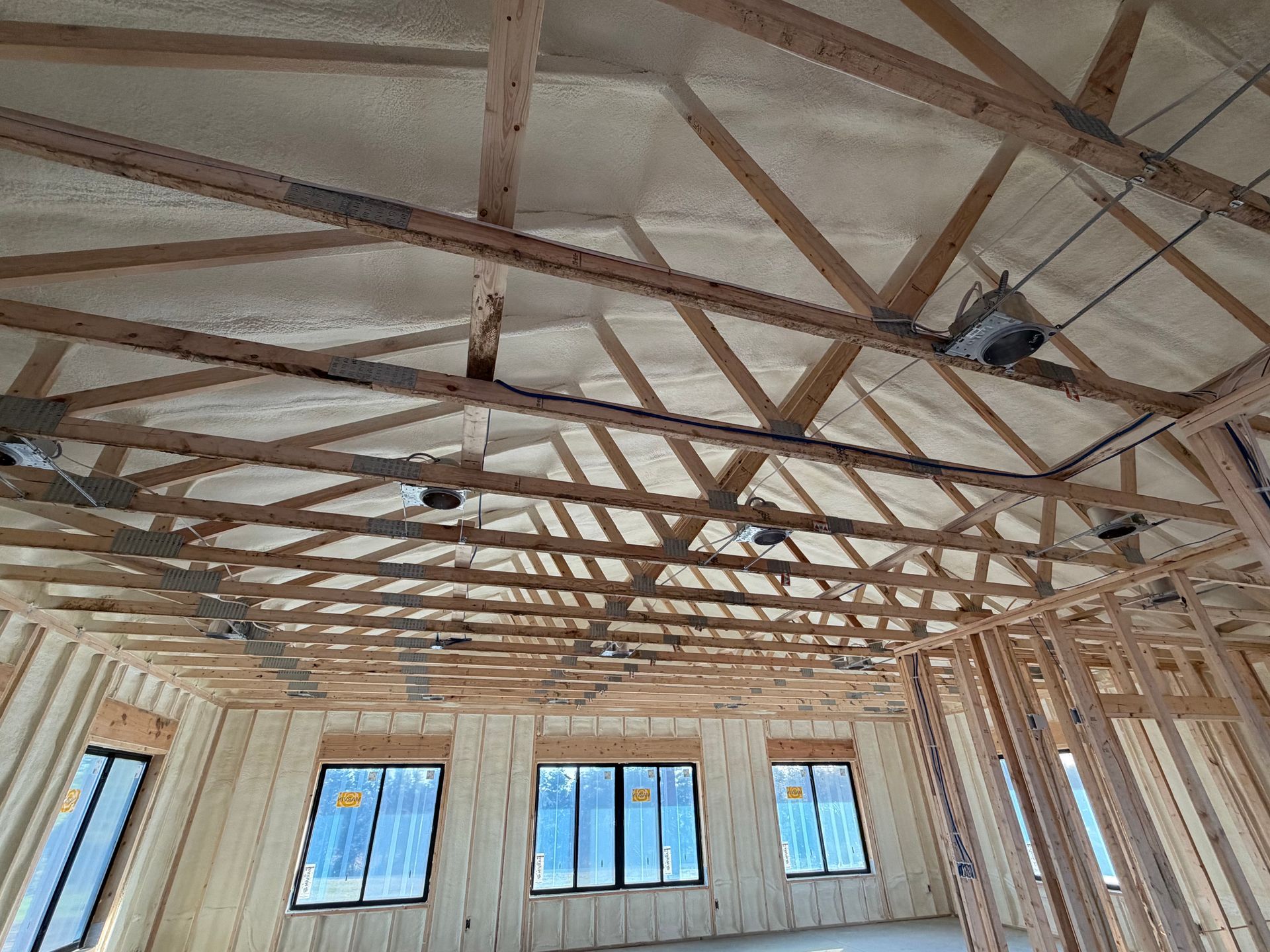
Interior of a wooden-framed building under construction with exposed roof trusses and several windows along the wall
June 15, 2026
Learn how spray foam roof insulation works on flat and low-slope roofs, when it’s a good fit, and what building owners should know before choosing SPF.
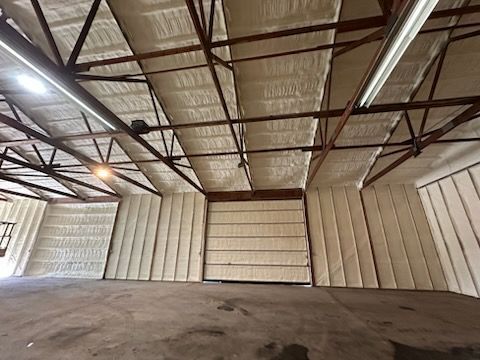
Empty warehouse interior with metal roof trusses and corrugated walls.
June 1, 2026
See where commercial closed-cell spray foam is used—metal buildings, warehouses, cold storage, and offices—and why it helps with condensation and costs.
Empty industrial warehouse interior with concrete floor, exposed wooden trusses, and large garage doors
May 15, 2026
Planning spray foam for a pole barn? Learn when roof-only is enough, when walls matter, and how to choose based on heat, use, and condensation.
Show More