


Why Is My House So Drafty? (And What Actually Fixes It)

Karen Danner • September 15, 2026

Share this article

The short answer: Drafts almost never come from where you think. The usual culprits are hidden air leaks — rim joists in the basement, gaps around the attic, and unsealed penetrations — not your windows. Sealing those leaks with closed-cell spray foam is usually a one-day, targeted fix that makes the whole house feel warmer and cuts your heating bill.

It happens every September in Nebraska: the first cool nights arrive, and suddenly you can feel it — that chilly current across the living room floor, the bedroom that never warms up, the thermostat that says 70 while your feet say otherwise. If that's your house, you're not imagining it. Here's what's actually going on, and what fixes it for good.

Where do drafts actually come from?

When we diagnose a drafty home, we almost always find the same hidden leak points:

Rim joists. The wooden band where your house sits on its foundation is the single leakiest spot in most Nebraska homes — and almost nobody ever looks at it. Cold air pours in down there and chills your floors from below. (We wrote a whole post on rim joists as the hidden draft source.)

Attic gaps, kneewalls, and slopes. Warm air escapes through the top of the house wherever the attic isn't sealed — around chases, hatches, and the angled ceilings of bonus rooms.

Penetrations. Every pipe, wire, vent, and duct that passes through a wall or floor leaves a gap around it. One gap is small; dozens add up to a window left open all winter.

Why do drafts get worse in the fall?

Blame something called the stack effect. As it gets colder outside, the warm air in your house rises and escapes through the leaks up high — and every bit that escapes pulls cold outside air in through the leaks down low. The bigger the temperature difference, the stronger the pull. That's why a house that felt fine in September can feel drafty by Halloween: the leaks were always there, but now they're working against you around the clock.

Will new windows fix my drafts?

Honestly? Usually not — and this is where homeowners waste the most money. Unless your windows are genuinely failing, replacing them is one of the most expensive ways to chase a draft, because most of the leakage is in the places you can't see. Sealing rim joists and attic gaps with closed-cell spray foam typically costs a fraction of a window package and does far more for how the house actually feels. We'd rather tell you that up front than have you spend big and still be cold.

What actually fixes a drafty house?

Air sealing — and that's exactly what closed-cell spray foam does best. Unlike rolled insulation, foam seals and insulates in one step: it expands into the gaps, hardens, and permanently closes the leaks while adding real insulating value. For most homes, this is targeted work on the worst spots, not a whole-house tear-up. A typical residential job — rim joists, attic trouble spots, a cold bonus room — is done in a day, and you feel the difference that night.

The payoff shows up twice: a house that finally holds an even temperature, and a furnace that runs a whole lot less. That's how our customers cut energy bills by 15–50%.

Frequently asked questions

How do I find out where my drafts are coming from?

Have us take a look — it's free. We'll walk the house, check the usual suspects, and show you exactly where the leaks are and which ones are worth fixing. No pressure, no upsell.

Do I need my whole house spray foamed?

Almost never. Most drafty homes need targeted sealing in a few key areas. We always recommend the smallest fix with the biggest payoff.

How fast will I notice a difference?

Immediately. Air sealing works the moment the foam cures — most customers notice warmer floors and steadier rooms the same evening.

Will it help in the summer too?

Yes — the same seal that keeps cold air out in January keeps hot air out in July, so your air conditioner benefits just as much as your furnace.

Tired of being cold in your own house? Call or text Danner Spray Foam at 402-269-7058 — send a few photos and we'll tell you what we see — or request your free estimate before the real cold gets here.

Recent Posts

Combine harvester picking corn in a Nebraska field under a clear blue sky
By Karen Danner • September 1, 2026
Harvest is coming fast. See why early fall is the moment to fix condensation in grain storage, equipment sheds & livestock barns—before the season buries you.
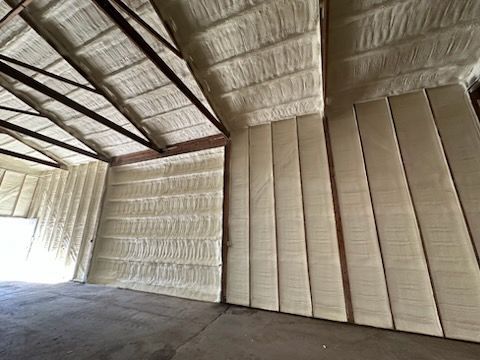
Building interior insulated with closed-cell spray foam by Danner Spray Foam
By Karen Danner • August 15, 2026
What drives the price of spray foam insulation in Nebraska? See the factors that shape your quote, why closed-cell is worth it, and how to get a free estimate.

A white two-story home framed by trees with colorful fall foliage in autumn
By Karen Danner • August 1, 2026
Building a shop, barn, or addition this fall? Here's why lining up spray foam in late summer means a warmer, drier space before Nebraska winter—and no scramble.

Blazing summer sun bursting through a bright blue sky on a hot day
By Karen Danner • July 15, 2026
Closed-cell spray foam isn't just for winter. See how it blocks summer heat, eases your AC, and keeps Nebraska homes, shops & garages cooler and cheaper to run.

June 30, 2026
Nebraska weather can change in a hurry.
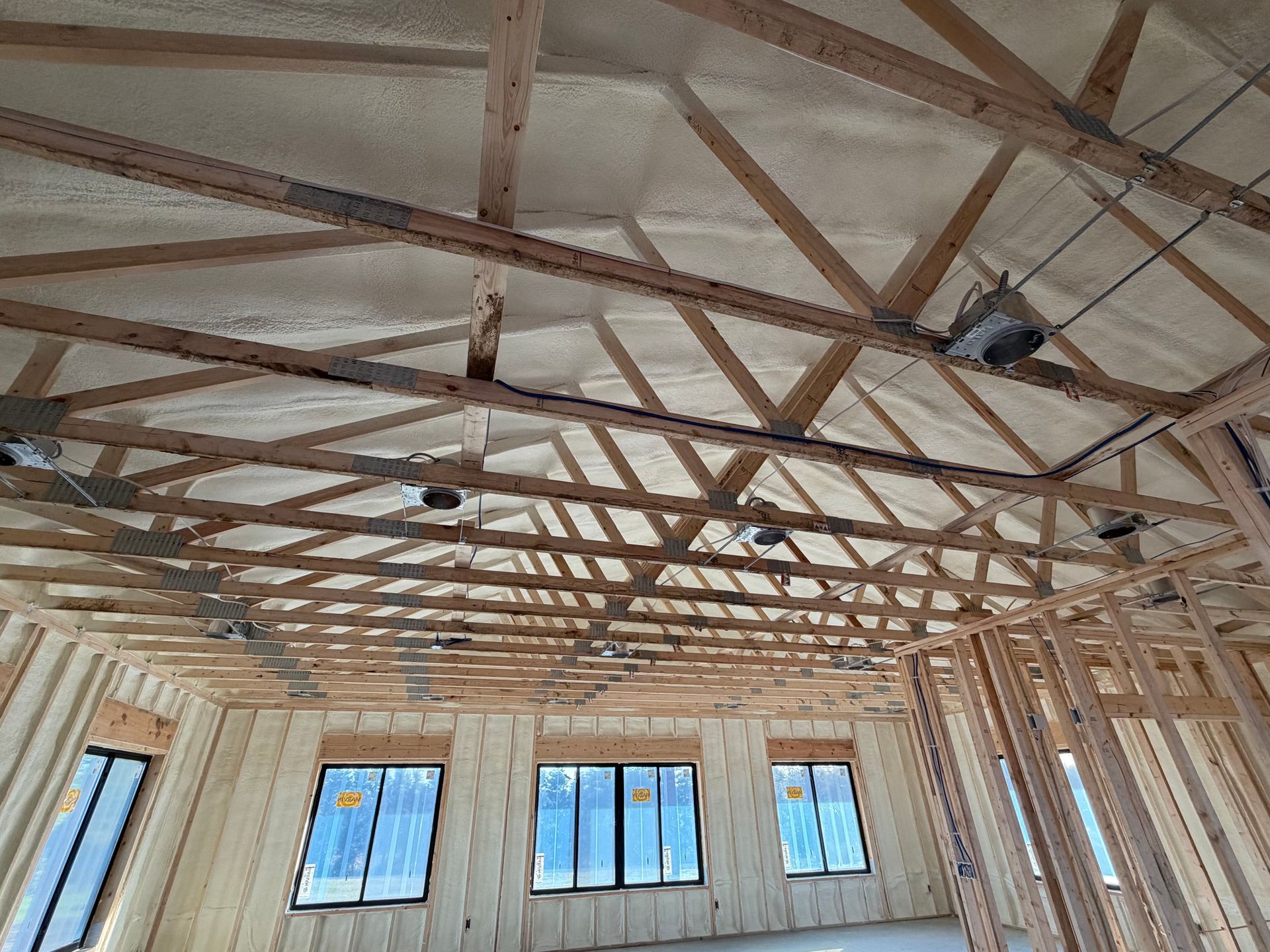
Interior of a wooden-framed building under construction with exposed roof trusses and several windows along the wall
June 15, 2026
Learn how spray foam roof insulation works on flat and low-slope roofs, when it’s a good fit, and what building owners should know before choosing SPF.
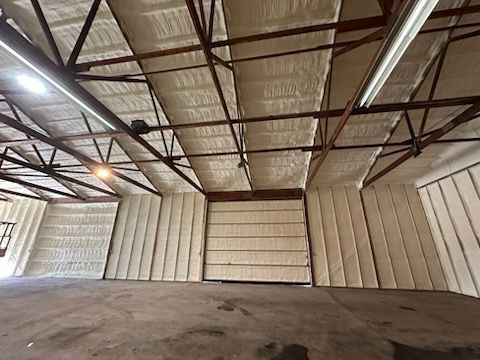
Empty warehouse interior with metal roof trusses and corrugated walls.
June 1, 2026
See where commercial closed-cell spray foam is used—metal buildings, warehouses, cold storage, and offices—and why it helps with condensation and costs.

Empty industrial warehouse interior with concrete floor, exposed wooden trusses, and large garage doors
May 15, 2026
Planning spray foam for a pole barn? Learn when roof-only is enough, when walls matter, and how to choose based on heat, use, and condensation.
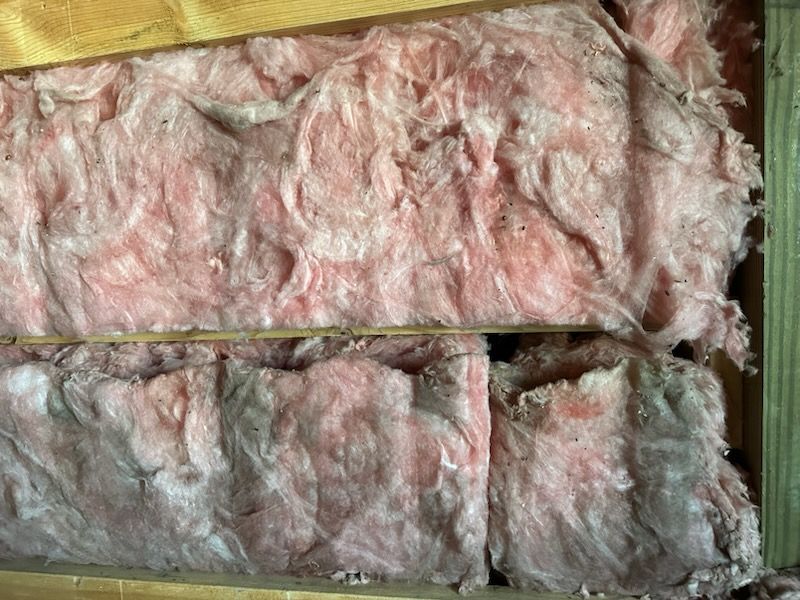
Pink fiberglass insulation batts stacked in a wooden frame, with foil or plastic backing visible.
May 1, 2026
Crawl spaces can cause cold floors, drafts, and musty odors. Learn insulation options, moisture basics, and why closed-cell spray foam is often a strong fit.
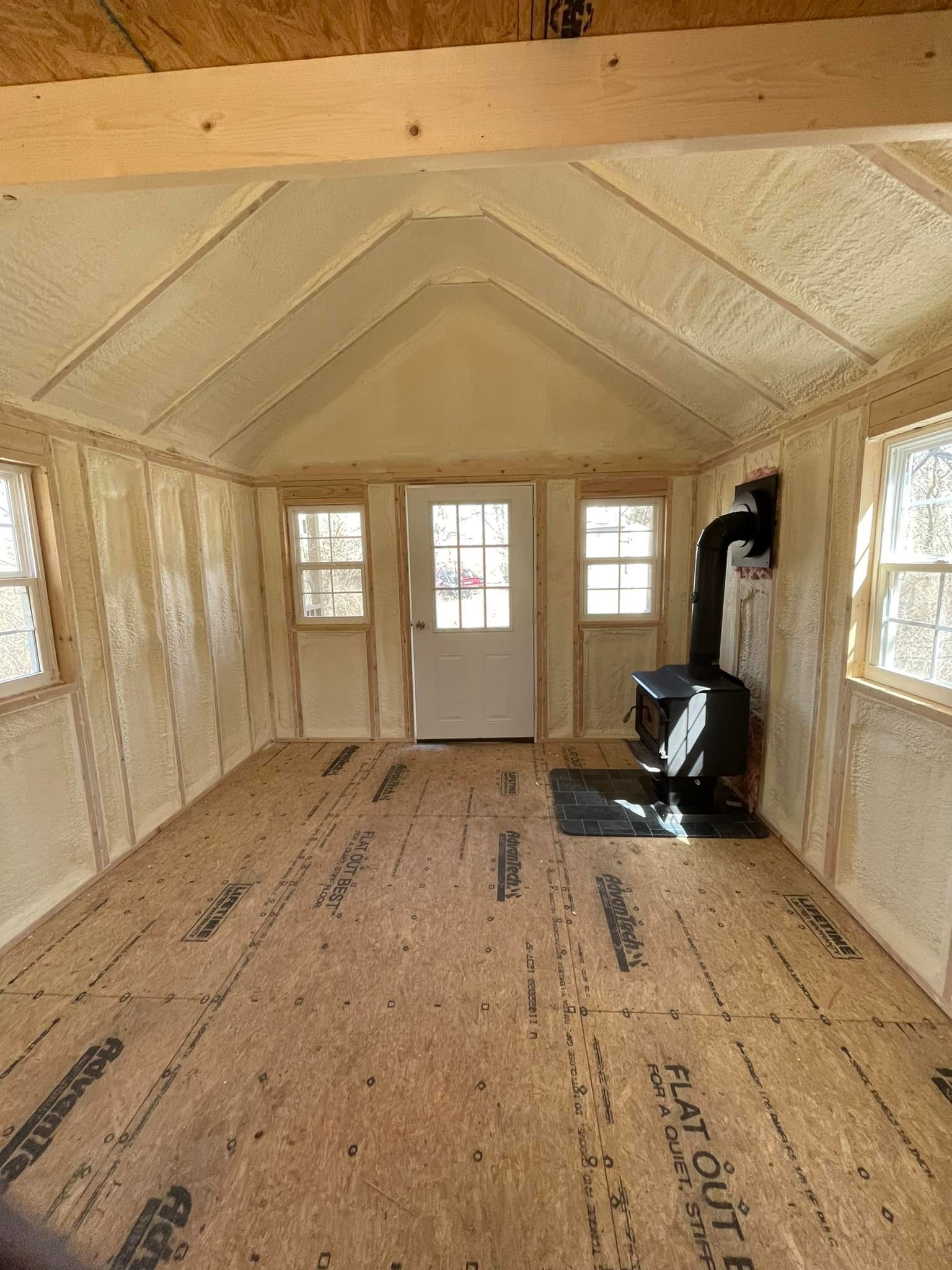
Insulated tiny house interior with plywood floor, white door, windows, and a wood stove at one end
April 15, 2026
Insulation slows heat loss, but air sealing stops drafts. Learn the difference, where leaks happen, and why closed-cell spray foam often delivers the biggest comfort gain.
Show More